By Siân Jones and Elizabeth Robson
We recently published the Social Values Assessment Report for Balmacara Estate, a c. 2,500 hectare crofting estate in Lochalsh on the West coast of Scotland. In this post, we briefly summarise the assessment findings before considering wider relevance of the Report for those not working directly with the property. A link to the full Report is provided below.
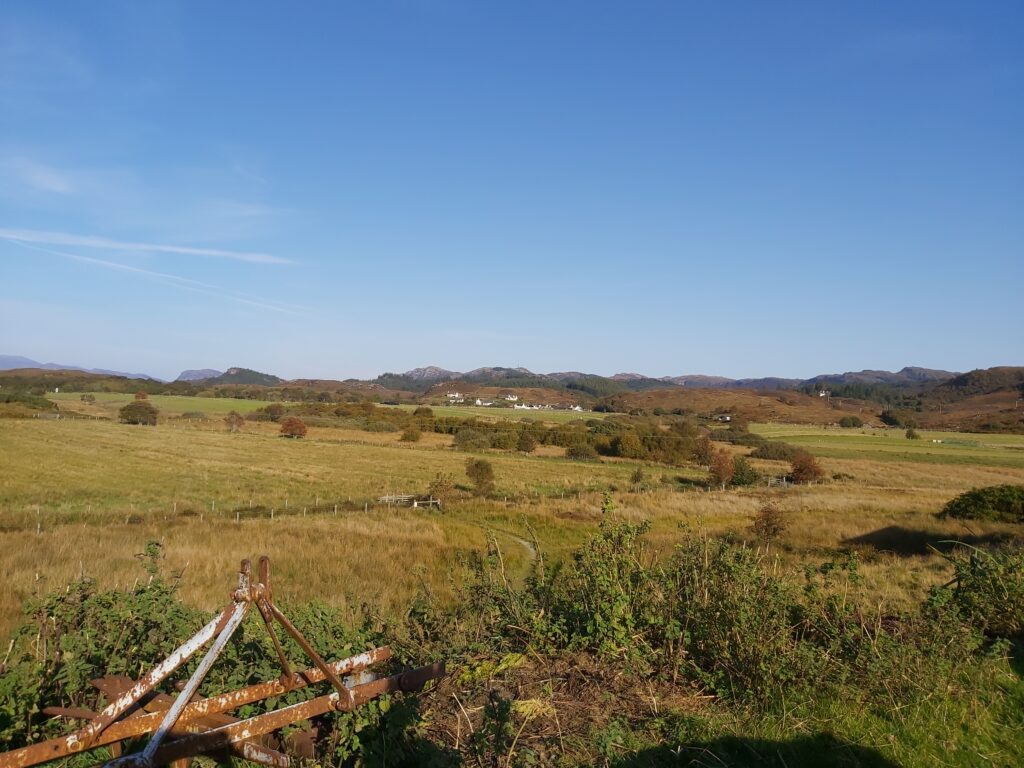
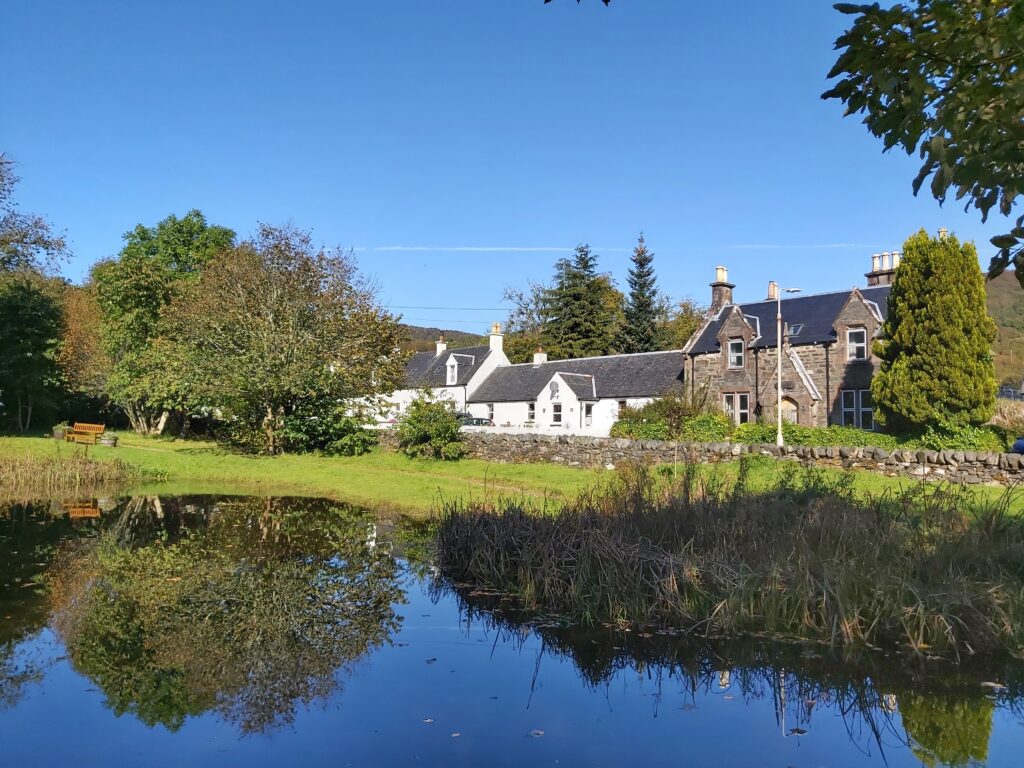
Left: Field systems with Drumbuie township in the distance; Right: The mill pond at Balmacara Square (photo credits: Elizabeth Robson)
The Social Values Assessment for Balmacara Estate found that place-based identities and attachments are particularly complex due to the scale and extent of the property – an estimated 1,500 people live either on the Estate or in the immediate surrounding area. For people who live on the Estate, specific settlements tend to be the primary focus of social values relating to home, roots, family connections and social memory, but there are complex, cross cutting networks of attachment to place within and beyond the Estate. As elsewhere in the Highlands and Islands, family connections are an important aspect of establishing ‘belonging’ to both people and place, but being ‘local’ is a flexible category that is subject to negotiation. Intangible connections between people and buildings, and the stories associated with them, are important in the production of social values linked to family and community. The Estate also encompasses a ‘peopled landscape’ reproduced through oral histories and narratives, e.g. relating to Clan Matheson.
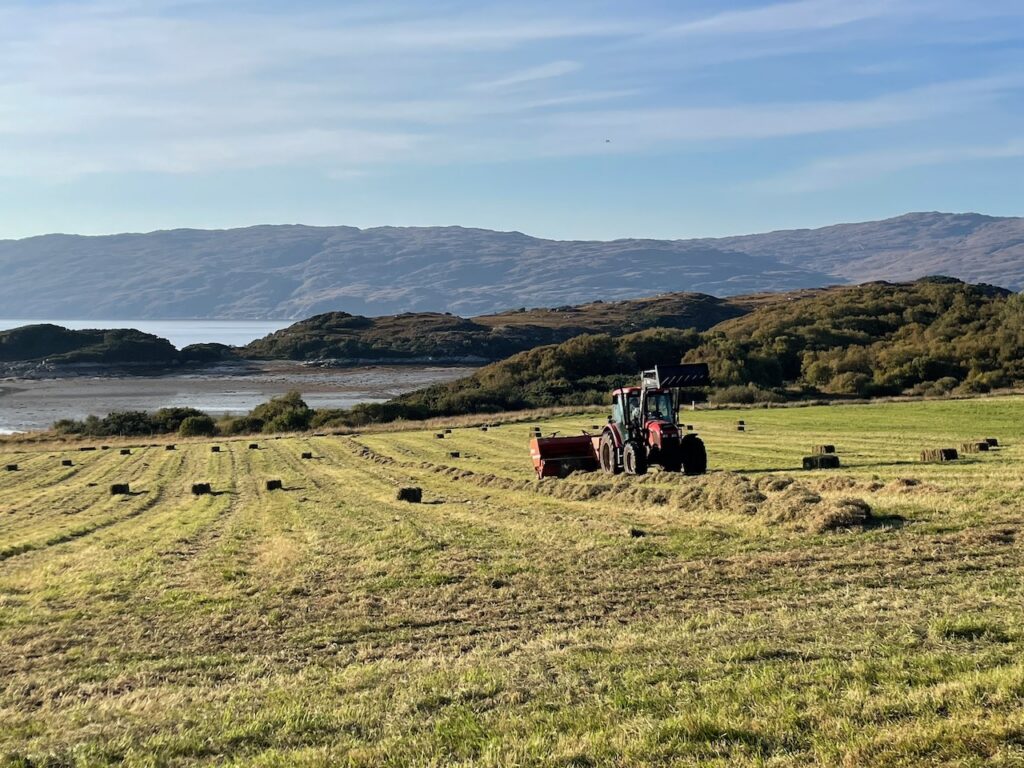
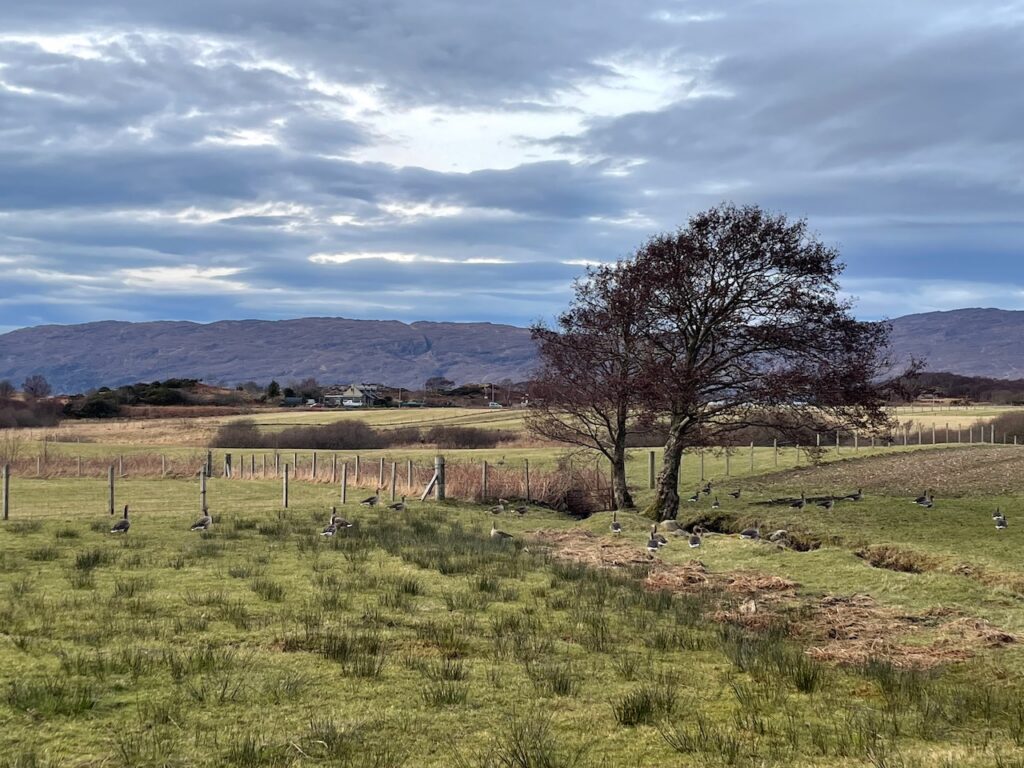
Left & Right: Crofting landscapes around Plockton (photo credits: Siân Jones)
Social values linked to crofting are a prominent aspect of Balmacara Estate, which encompasses eight crofting townships. These values are informed by a strong sense of custodianship of the land, which is usually embedded in trans-generational relationships. Relatedly, rights-based values linked to ownership and belonging are an integral part of the living heritage associate with crofting. Practices relating to crofting and the boundaries of common grazings are part of the customary knowledge of a township; however, demographic changes have led to increasingly diverse, and at times conflicting, values associated with these.
The environments and landscapes making up Balmacara Estate are valued for their variation, visual interest and biodiversity. Crofting is attributed an important role in this, particularly in shaping varied field systems, land use and vegetation cover. Woodlands and coastlines are also a source of rich social and aesthetic values. Values arising from these varied landscapes are linked to paths, which make them accessible and create a sense of connectivity within and beyond the Estate. The ways in which the Estate is situated in the wider landscape, and the views it offers within and beyond its boundaries, are highly valued, especially the juxtaposition of sea and mountains.
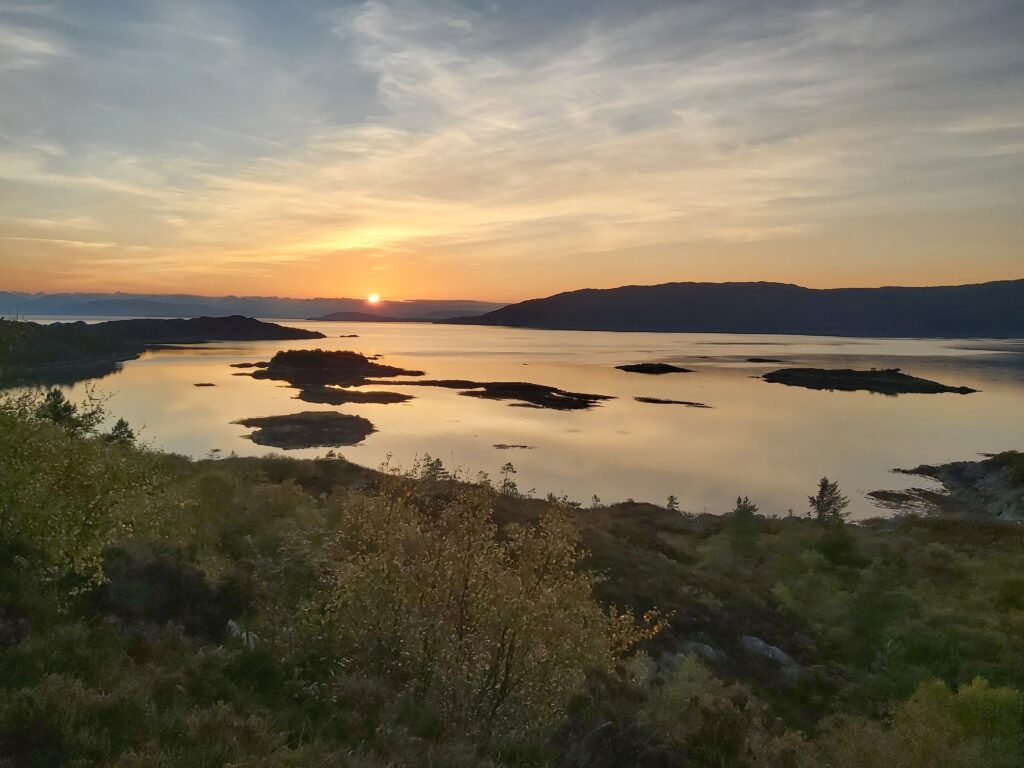
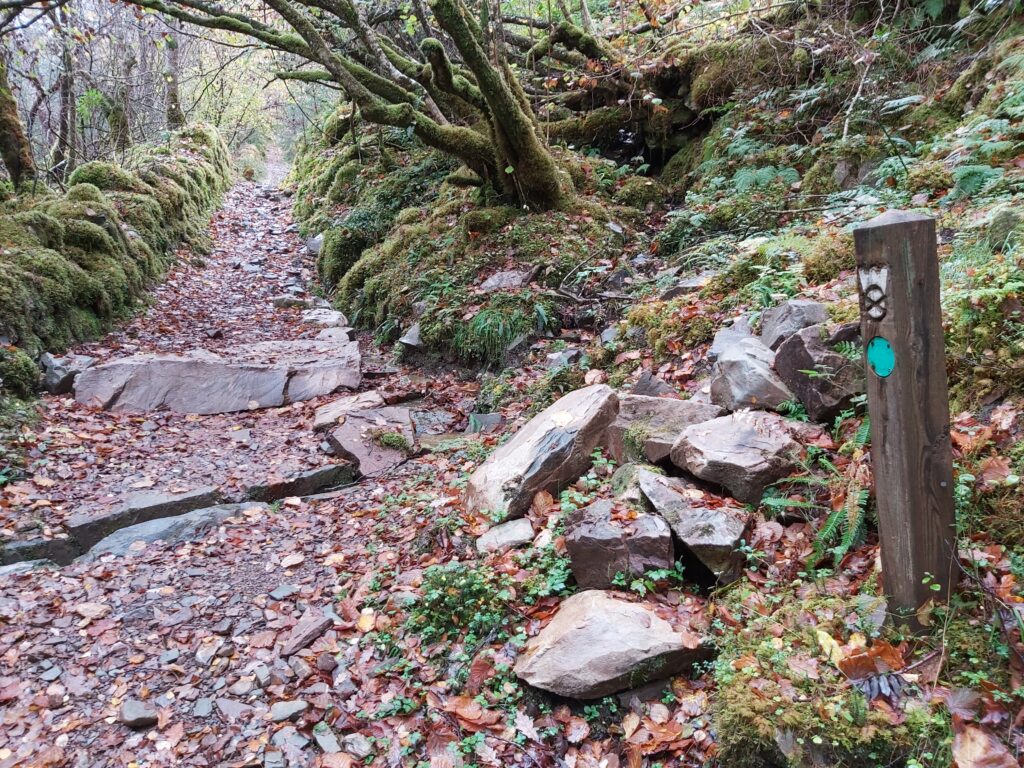
Left: A view from Balmacara Estate across the water and surrounding islands; Right: One of the many footpaths that criss-cross the area (photo credits: Elizabeth Robson)
The area encompassed by the property is seen as a unique and special place by many, ‘magical’ even, and is associated with peace, tranquillity, calmness, freedom and safety. At the same time, concerns about sustainability, continuity and change mean that social values linked to the area can become fraught and contested. Three interlinked concerns stand out: affordable housing, sustainability of crofting, and the future of communities. People’s varied responses to change and diversification are informed by tradition, identity and authority. What should be retained, what can or should change, and who decides are questions embedded in social values linked to identity, belonging and inter-generational relationships. In terms of both social and environmental sustainability, value-related tensions are often rooted in diverse forms of care and how these are understood and recognised.
The Assessment findings are explored in detail in the Report (see link below). Why might you want to refer to this Social Values Assessment? We suggest it may be relevant if you are thinking about:
- Management of a property with tenants and/or significant numbers of residents.
- Values relating to crofting (including intangible/living heritage).
- Properties where nature conservation is a significant part of the management plan.
- Values relating to sustainability – housing, tourism, community.
- Properties where communities express strong rights-based values informed by ideas of custodianship and/or care.
- Large landowner management requirements under the Land Reform (Scotland) Act (2025).
This is not a comprehensive list and on examining the Report, you may well see connections to other areas of interest.
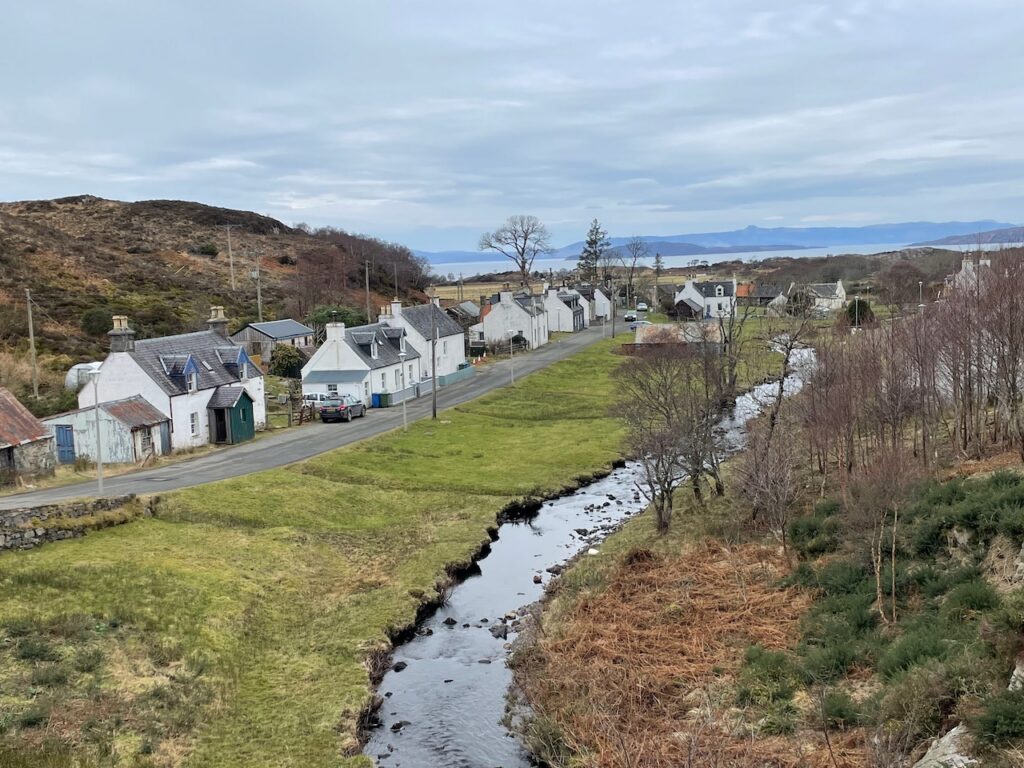
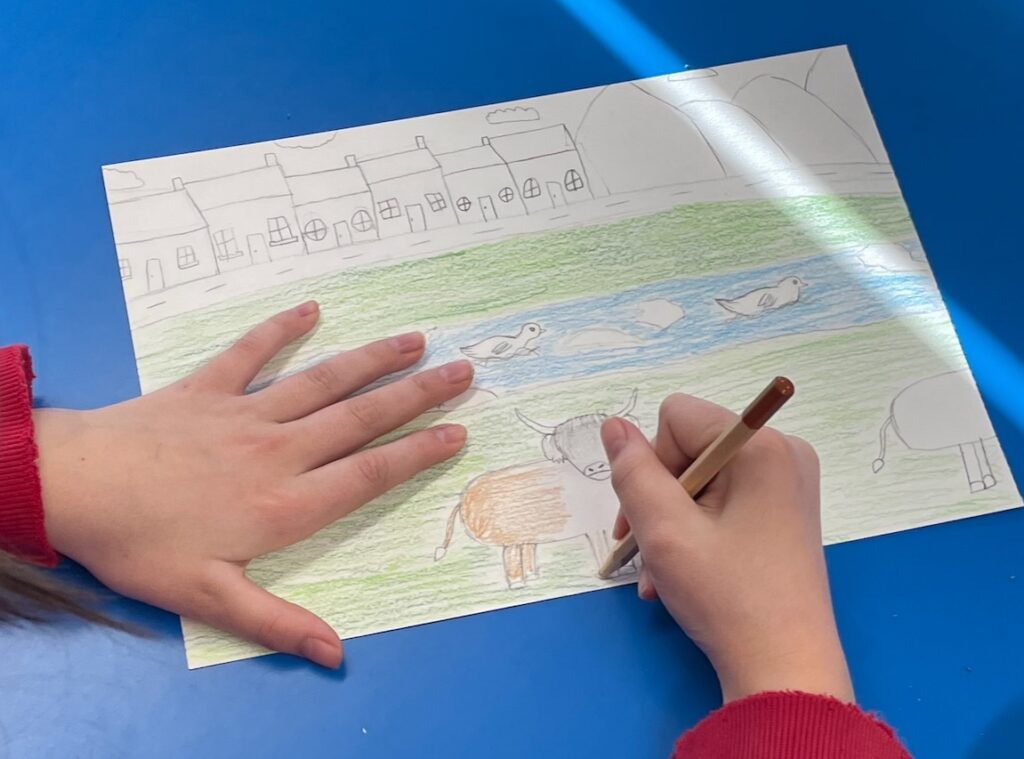
Left: A view of Duirinish; Right: A picture of the same location drawn by a pupil during the school workshop (photo credits: Siân Jones)
The Balmacara Estate pilot is an example of how to design a social values assessment for a property with a significant resident population and shows the range of methods that can be used. The school workshop, delivered in collaboration with Trust Rangers, offers a transferable method for incorporating discussions on social values alongside learning activities (see Annex IV in the Report). The assessment also demonstrates how collaboration with established groups (e.g. community councils/trusts and interest groups, e.g. a photography group) can help with securing participation.
If you would like to read the full Social Values Assessment Report for Balmacara Estate, you can access it here (see the file at the bottom of the page). We wish to thank everyone who participated in this assessment and shared their time and knowledge. We are also grateful to the Balmacara Estate property team for their support.