By Elizabeth Robson and Siân Jones
It has been a while since our last blogpost but rest assured we have been busy in the interim, undertaking research at the seven properties that were selected for the pilot social values assessments (see Pilot Site Selection) and analysing our findings. It has been fascinating getting to know the properties and working with community members and colleagues from across the Trust to explore the wealth of social values associated with these heritage places.
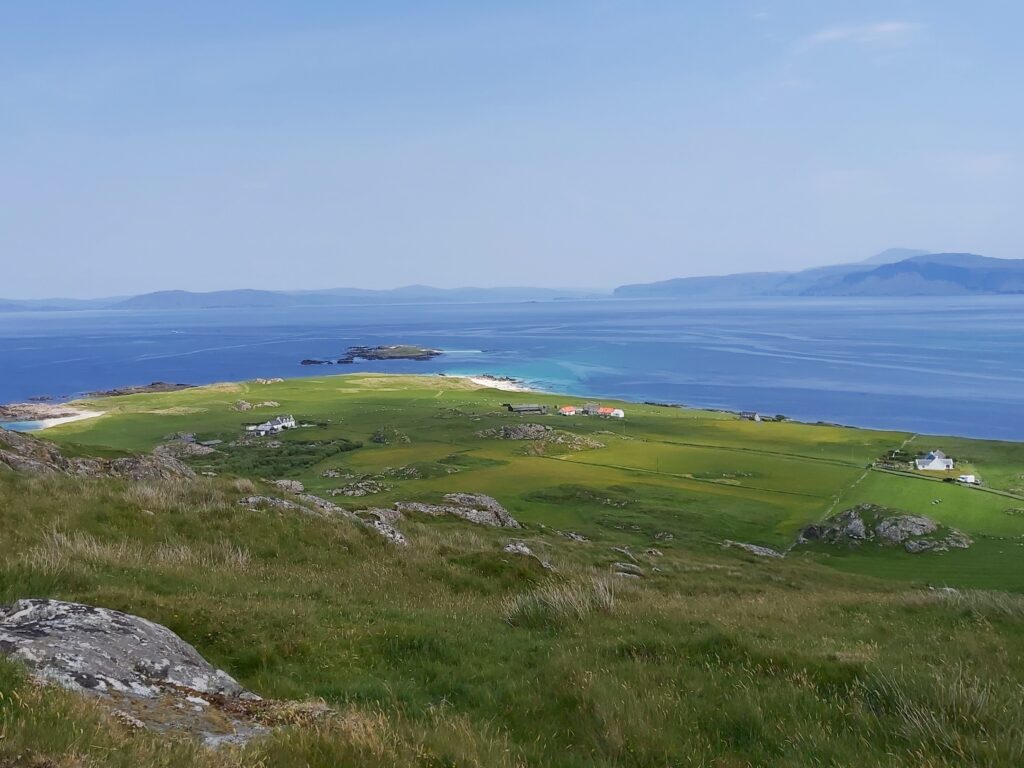
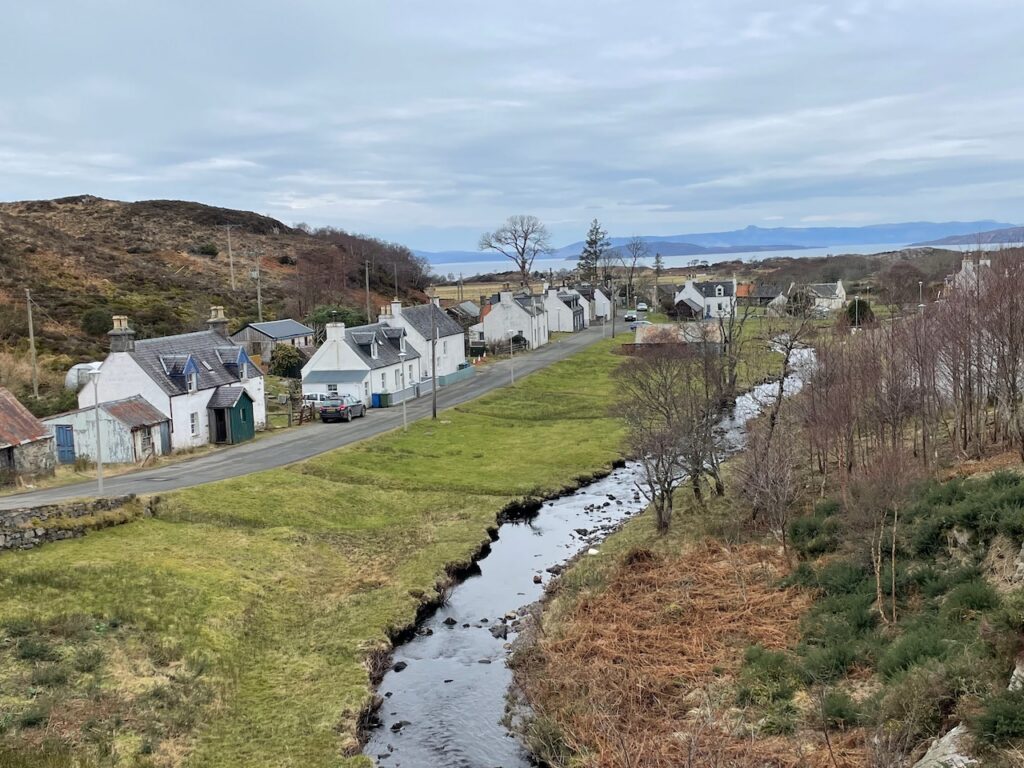
The North End of the Isle of Iona (left) and Duirinish village in Balmacara Estate (right): These are both tenanted properties with a history of crofting and farming where the diverse landscapes evoke differentiated senses of place and identity. The findings from these social values assessments have potential implications for activities such as interpretation and participatory planning processes. Photo credits: Elizabeth Robson (left) and Siân Jones (right).
Part of what has made this such a rich and interesting project – and has extended the discussions on the pilot assessment reports – has been the iterative nature of the property-based and organisational-level research. The project was designed with four broadly sequential but connected phases:
– Phase 1: an organisational overview, exploring current understandings and approaches to social values within the Trust (see Phase One Reflections).
– Phase 2: piloting social values assessments at multiple Trust properties (see Pilot Social Values Assessments).
– Phase 3: considering the practical and operational implications of the pilot findings.
– Phase 4: identifying how institutional systems and processes might incorporate the complex knowledges that social values assessments reveal.
It was always intended that the pilot assessments (Phase 2) would inform the organisational-level work in Phases 3 and 4. However, the understandings gained from discussing the emerging findings and implications of the assessments with Trust staff, as well as from working across multiple pilots, has created an even closer link between these processes than anticipated. As a result, organisation-level learning has been truly embedding throughout the project.
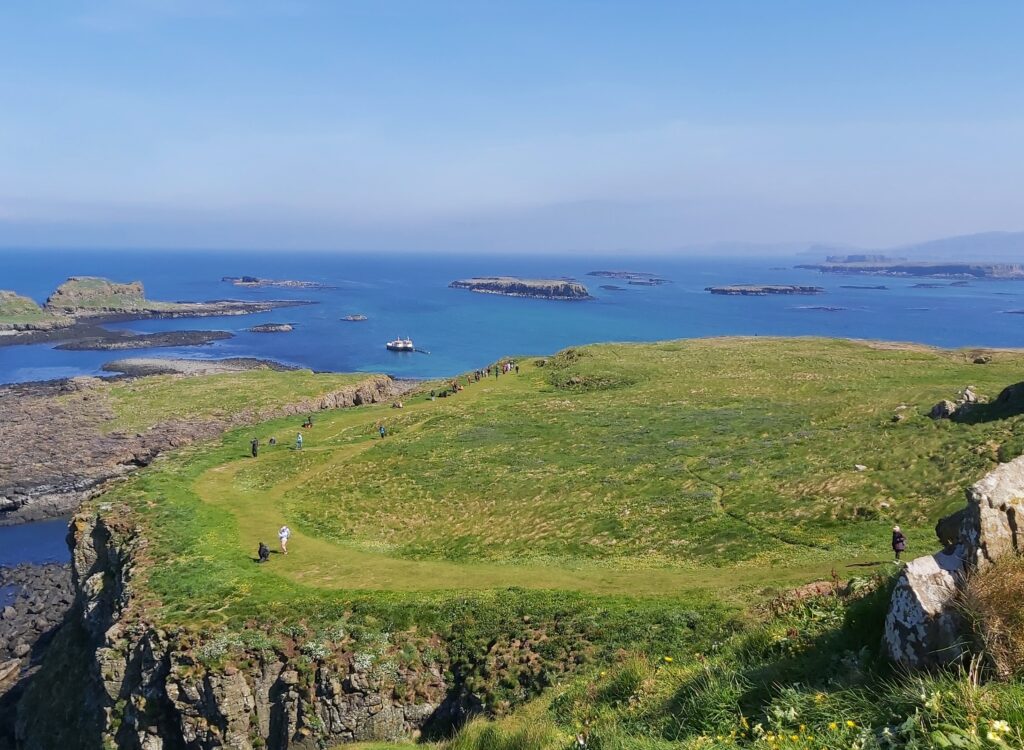
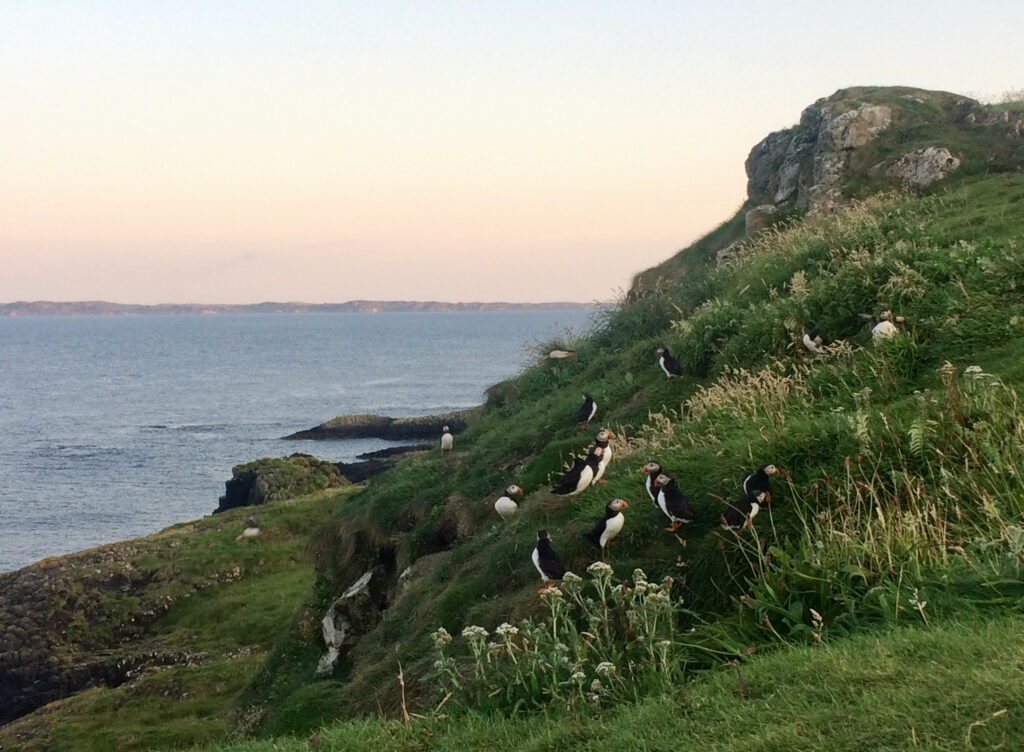
Visitors on the Isle of Lunga in the Treshnish Isles (left) and puffins on the Isle of Staffa (right): These uninhabited islands are designated for their natural heritage and attract thousands of visitors each year. The findings from these pilots have potential implications for activities such as communication and conservation. Photo credits: Elizabeth Robson (left) and Siân Jones (right).
Exploring the connections between local/property-based findings and organisational-level operations has been of huge benefit when it comes to identifying the potential implications and applications of this work for a wide range of roles and functions. The inclusive nature of these discussions has also helped to lay the foundations for on-going, broad-based dialogue on organisation-wide adoption of the project approaches.
With that in mind, over the coming months we will be holding a series of workshops (internal and external) through which guidance on organisational approaches to social values will be co-designed with Trust staff and other heritage practitioners. These discussions will help to ensure that the project outputs are responsive to day-to-day realities and can be adapted to a range of operational contexts. The guidance will be accompanied by resources addressing the key questions practitioners have about when, where and how to work with social values, and providing practical worked examples, based on the pilot assessment findings and experiences.

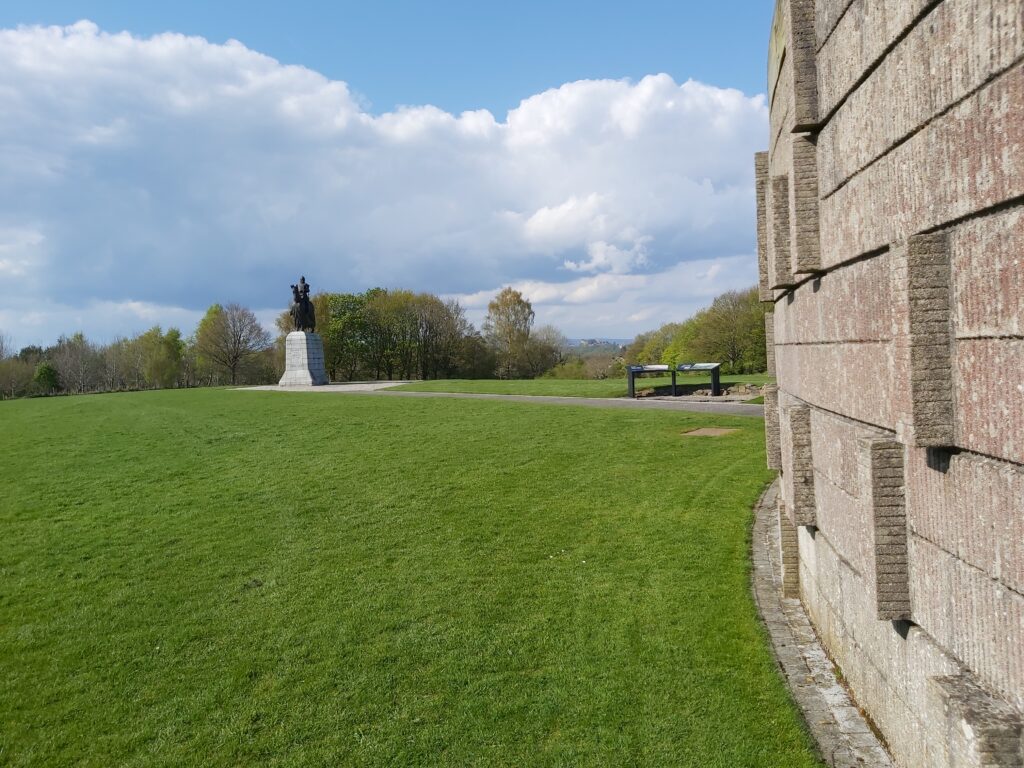
The main footpath up Ben Lomond (left) and the view towards Stirling from the Rotunda at Bannockburn (right): Many people feel connections to these iconic places from a distance and the social values expressed are differentiated within the properties’ diverse environments. The findings from these assessments have potential implications for activities such as community engagement and landscape management. Photo credits: Elizabeth Robson.
While some of the outputs will be specific to the Trust, we will also be sharing the project findings with sector partners in the UK and beyond, contributing to the wider conversation in the heritage sector on social values. For example, in April, Siân and Paula Whitelaw (from the Trust) will be meeting with the Norwegian National Trust (Fortidsminneforeningen) to talk about the project, and Siân and Liz will be drawing on their experiences during the pilot assessments when speaking at the Chartered Institute for Archaeologists (CIfA) conference in Edinburgh.
A massive thank you to everyone who has been involved in the project to date! We could not have done this work without the support of the Trust staff and community members who have generously shared their time and knowledge with us. The Fyvie assessment report was published last year (see here) and the remaining pilot assessment reports will be shared over the coming months, as they are finalised.
Further updates will be posted here, but if you have any comments, questions, or suggestions related to the project, please do not hesitate to contact us. Our details are available here.